Starts With the Target You're Working Toward
A monthly amount to save, or a lump sum by a date, like a down payment or a new truck. Everything after it is measured against that goal.
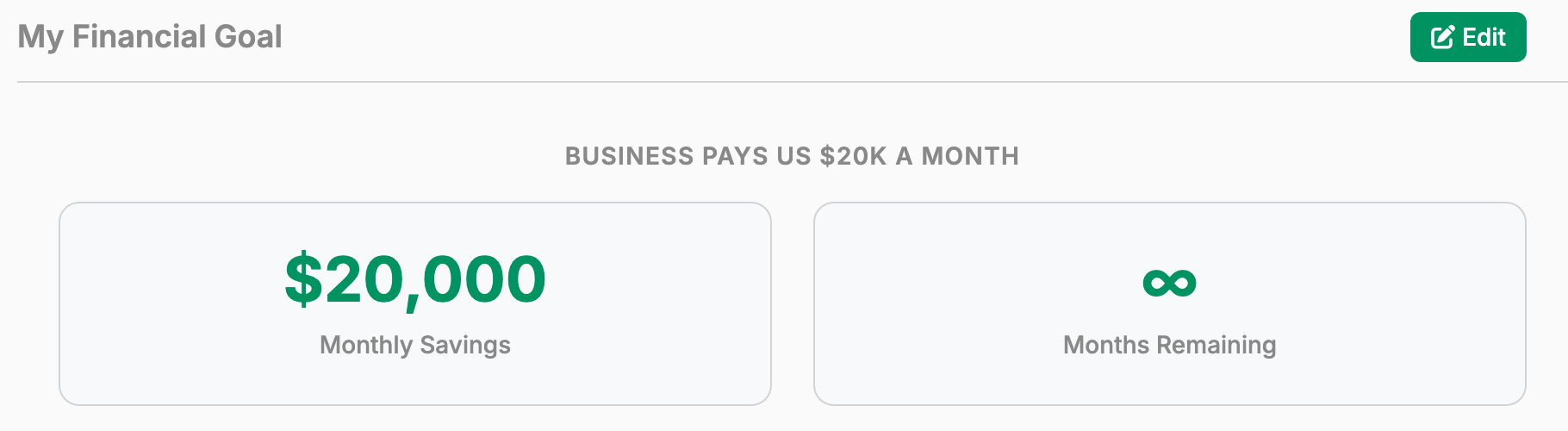
Set financial goals rooted in your household finances to then frame every business decision and forecast.
Entire App Free, No Account Needed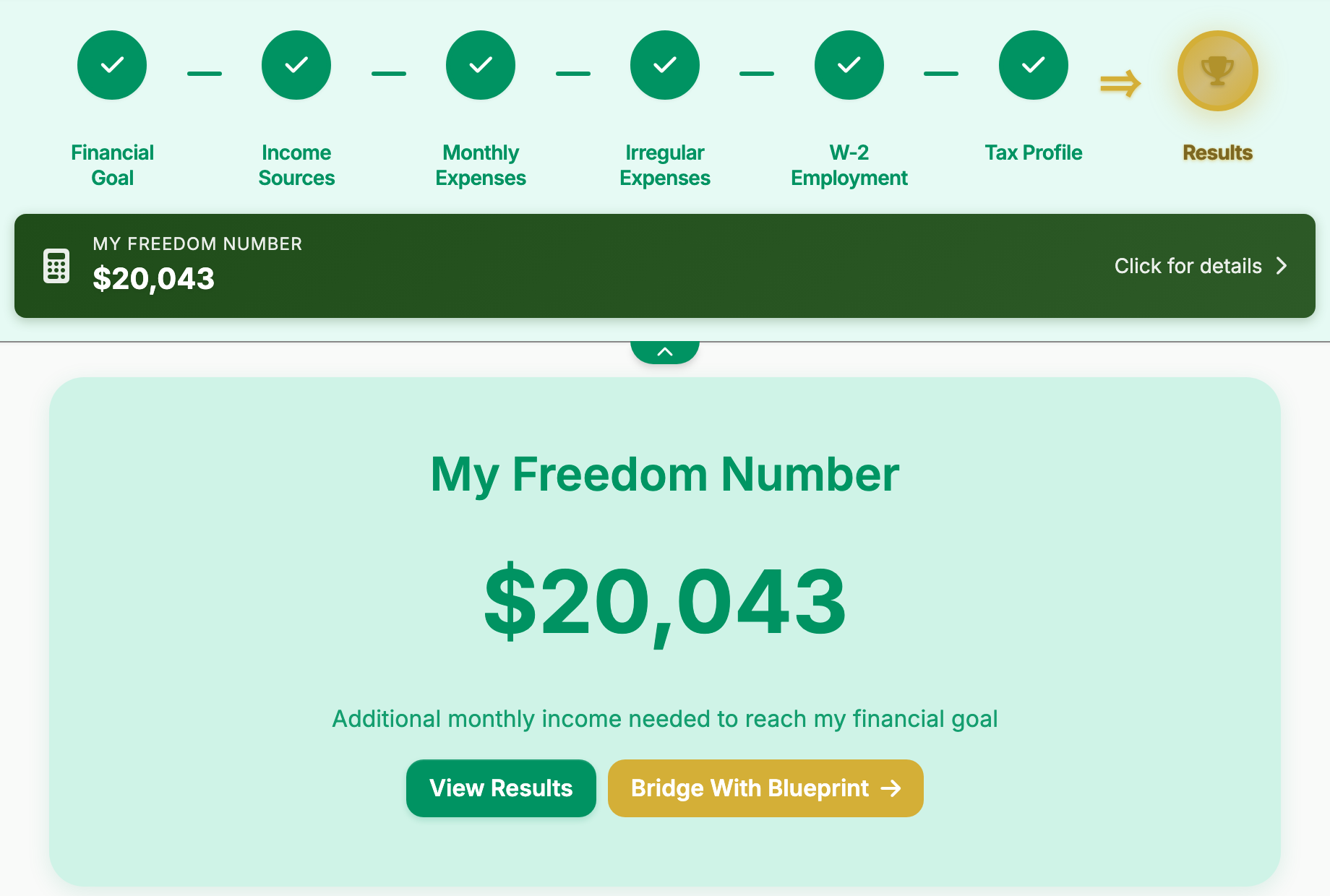


A monthly amount to save, or a lump sum by a date, like a down payment or a new truck. Everything after it is measured against that goal.
Monthly bills plus the ones that come a few times a year, like insurance premiums, holidays and car repairs, spread into one monthly figure.
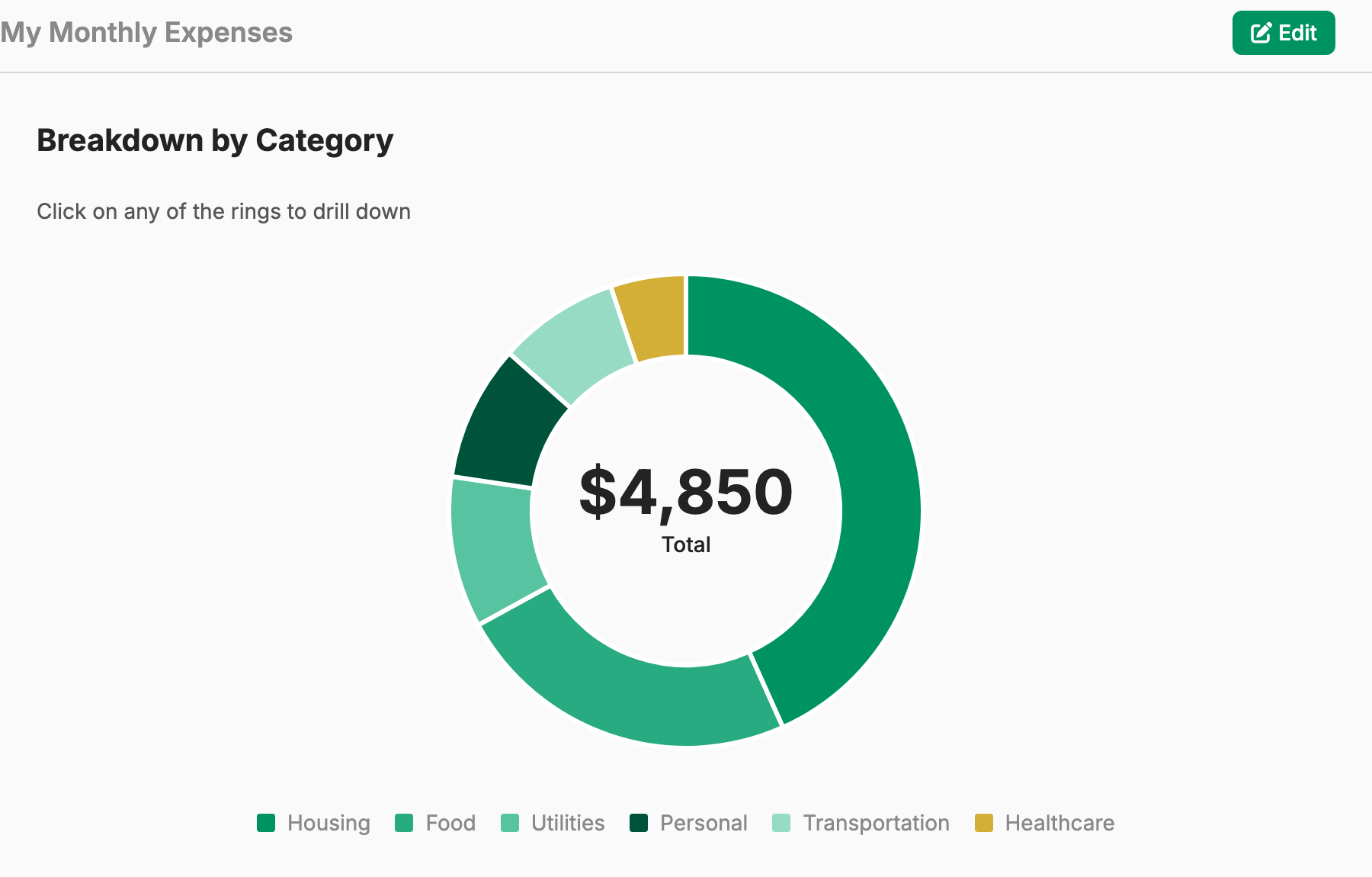
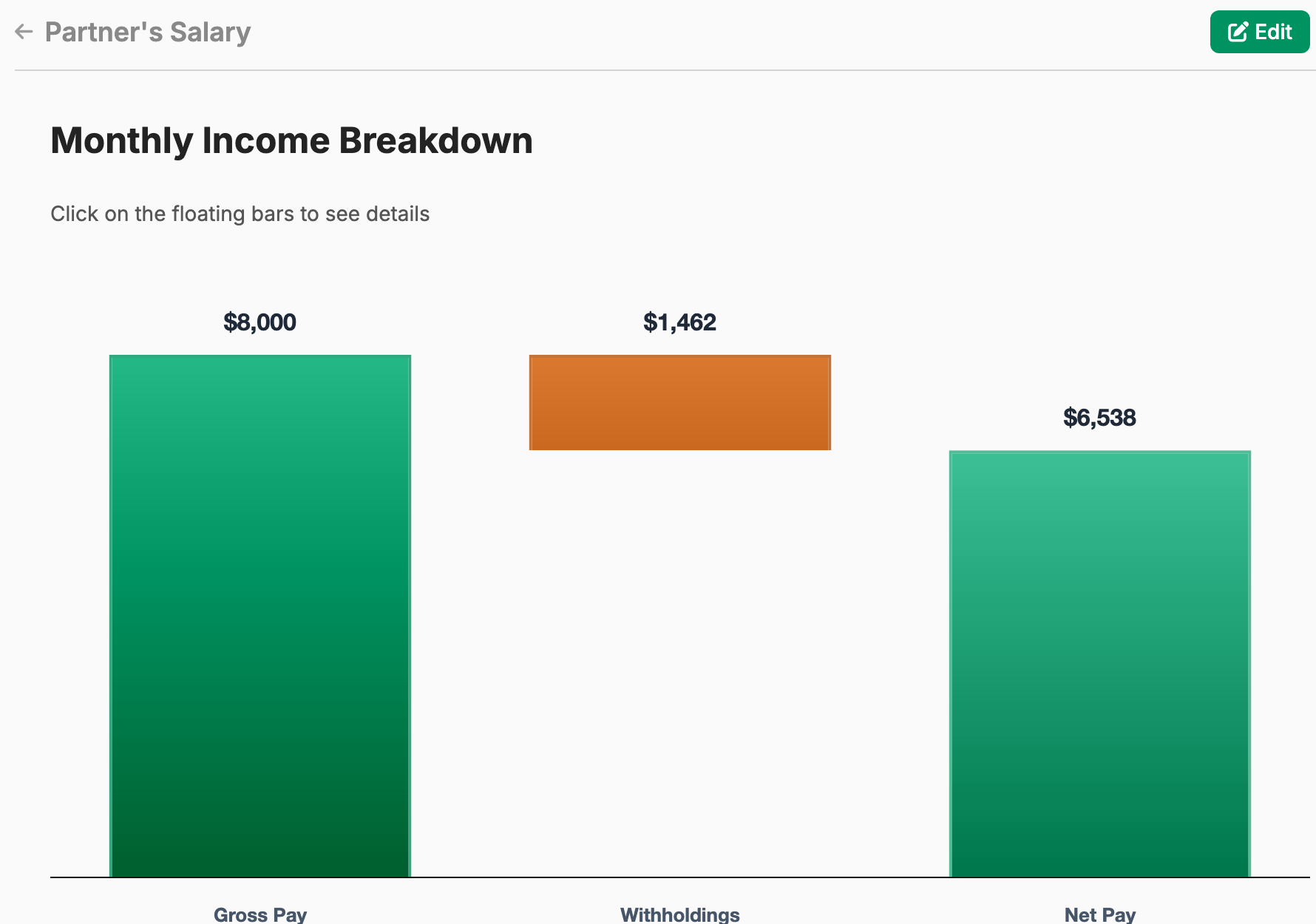
A partner's paycheck, rentals or investments, followed from gross to net: what's left after withholding and work-related expenses.
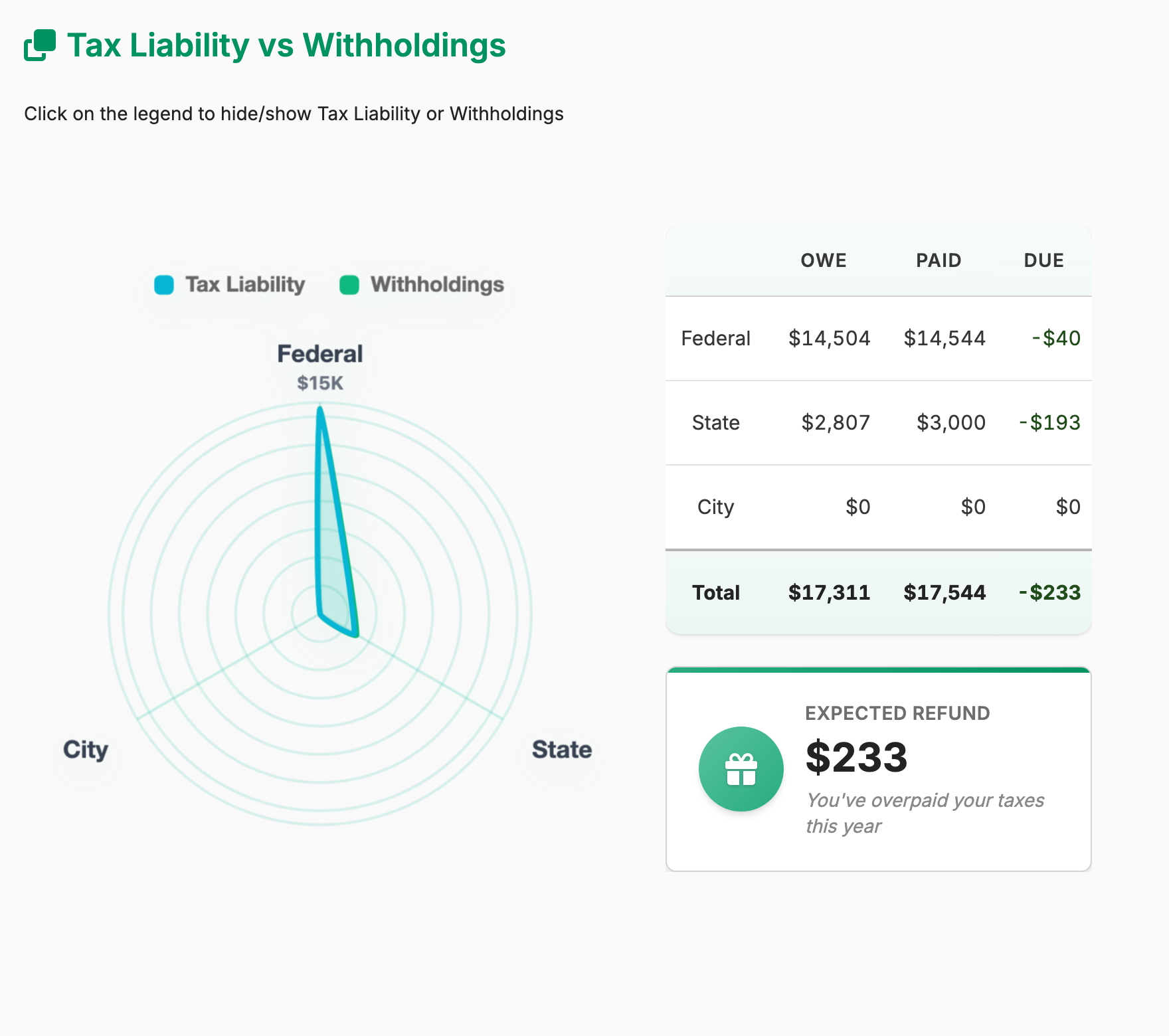
Worked out for your filing status, state, city, dependents and deductions, broken down visually.
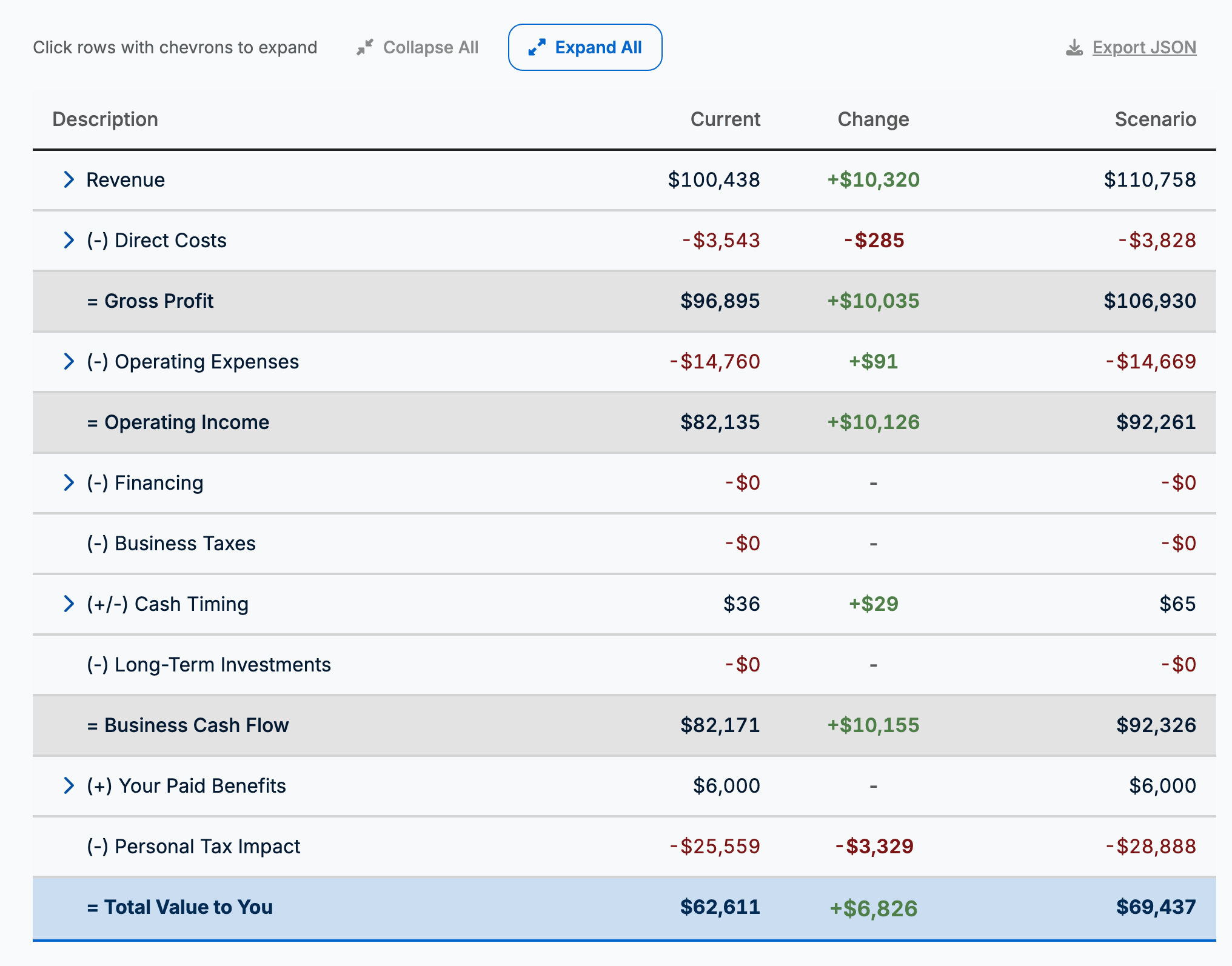
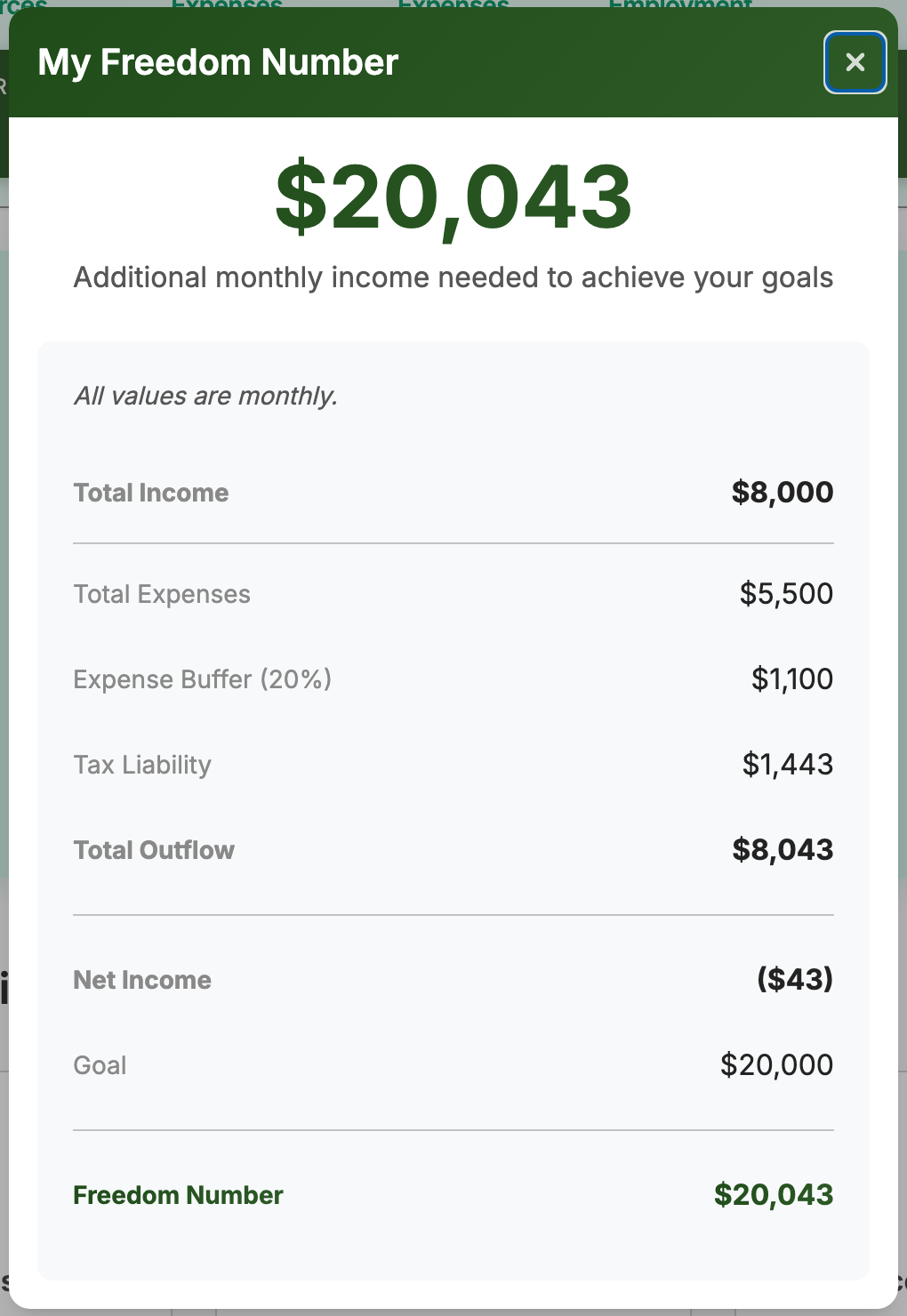
Shown as a table, line by line from your income to the number, and visualized so you can see where the gap comes from.
Test a hire, a price change or a new product against your number before you commit.
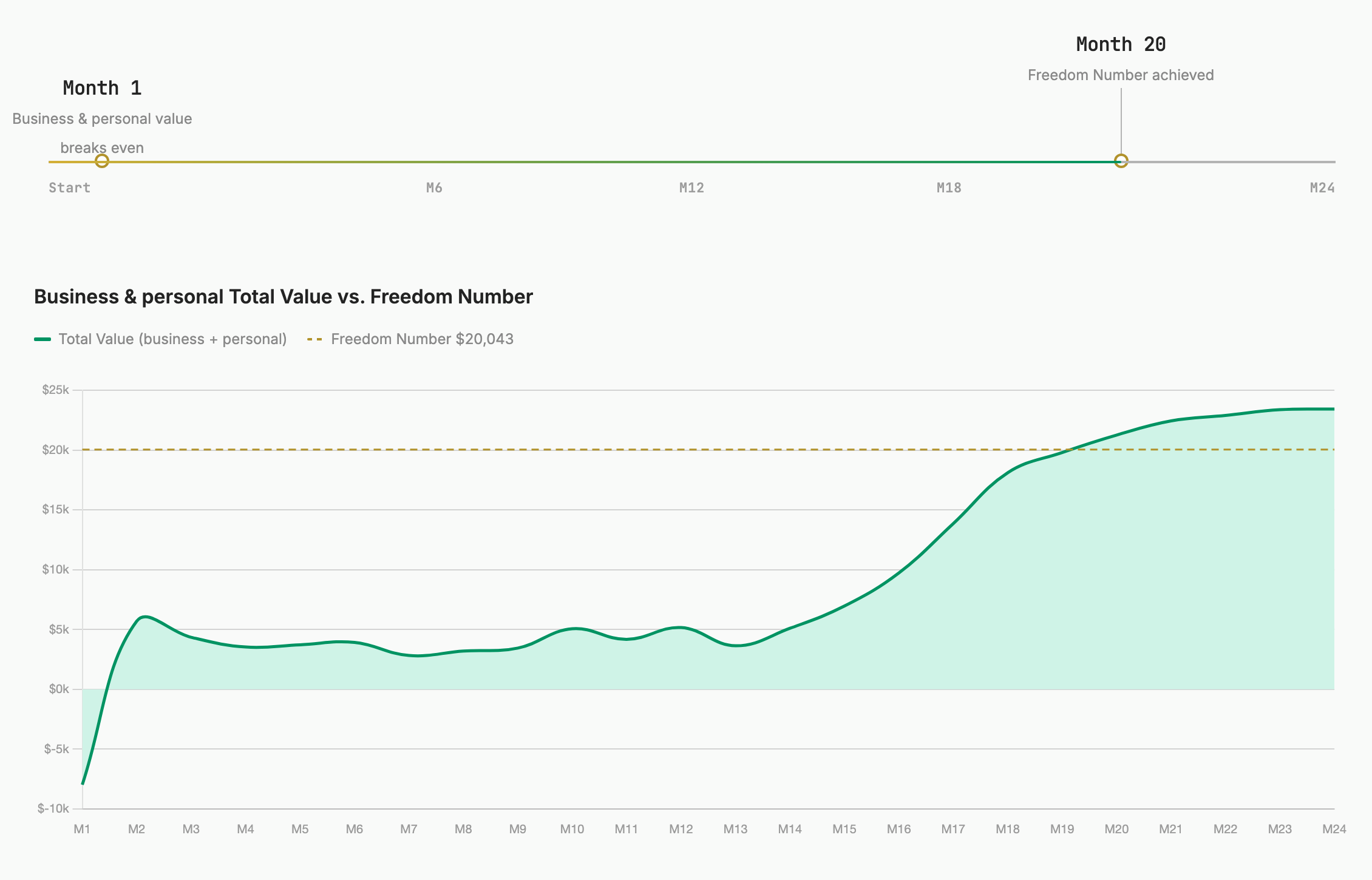
Design the next two years of your business around your number and see the month you reach it.
“Love the design and ease of everything. It makes it super easy to understand and takes a ton of stress off to have it all in front of you like that, rather than having it all in spreadsheets.”
| What you get | Occam's Model | Budgeting Apps | Business Finance Software |
|---|---|---|---|
| Free, with no account needed | Yes | Mostly paid | Mostly paid |
| Built for owners: the household and the business together | Yes | No | No |
| Sets the income your business has to pay you | Yes | No | No |
| Starts from a goal: monthly savings or a lump sum by a date | Yes | Savings goals | No |
| Federal, state and local tax for your filing status | Yes | No | The company's only |
| The target your decisions and forecasts are tested against | Yes | No | No |
| Week-to-week budgeting and spending tracking | No | Yes | No |
Comfortable is your household's number, not a national average. Add what you spend each month, the bills that come a few times a year and what you want to save, then subtract what your other income leaves after tax. The rest is what your business has to provide.
Start from what your household needs, not your old paycheck, then add tax: self-employed, you pay both halves of Social Security and Medicare and nobody withholds for you. The calculator gives the first figure; adding your business works out the tax on it.
Two figures: the monthly income your business has to provide, and the cash that carries you until it does. Set the second as a lump-sum goal with a date, and the calculator shows how much more you need each month to get there.
The extra monthly income your business needs to provide to reach your goal: the goal, minus what your other income leaves after expenses, a safety buffer and the tax on that income. Tax on the business income itself isn't in it; that's worked out once you add your business.
No to both. The whole calculator runs without an account; create a free one only if you want to keep your number.
Yes. Run it while you still have a job, and the figure becomes the income your business plan has to reach.